King Street, Sydney
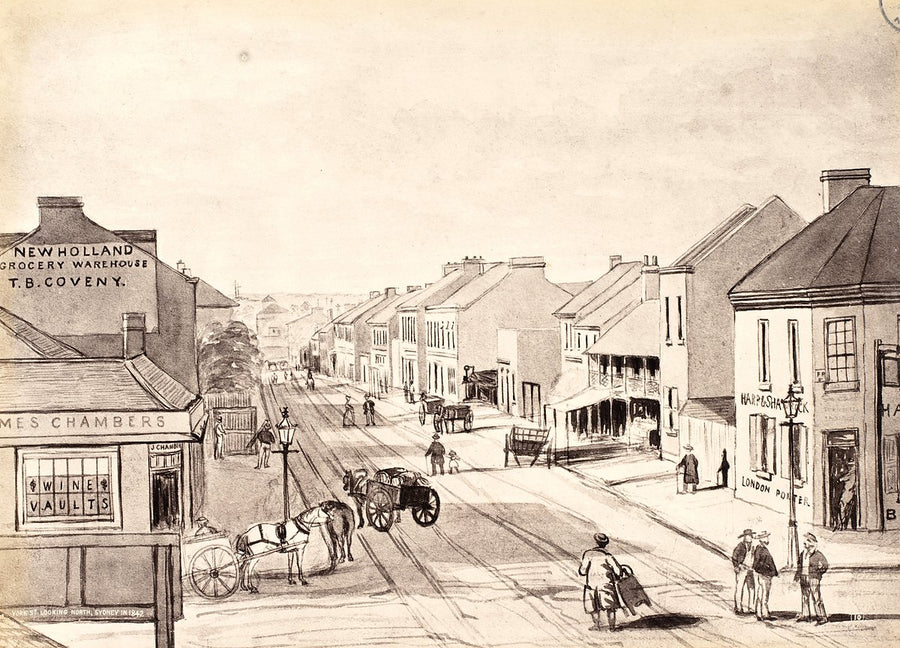
In 1842 King Street was unpaved, low-built and loud with carts, and its signage still named individual traders one by one — among them the New Holland Grocery Warehouse. We know this because a man called John Rae drew it.
Rae became Sydney's first full-time town clerk the following year and held the job until 1857. He was a self-taught amateur, and his set of twenty-six street scenes records a city no camera ever reached. It helps to know what King Street is: a cross-street, running the short way from George Street up to the government end at Macquarie, which has always made it the seam between the retail city and the official one.
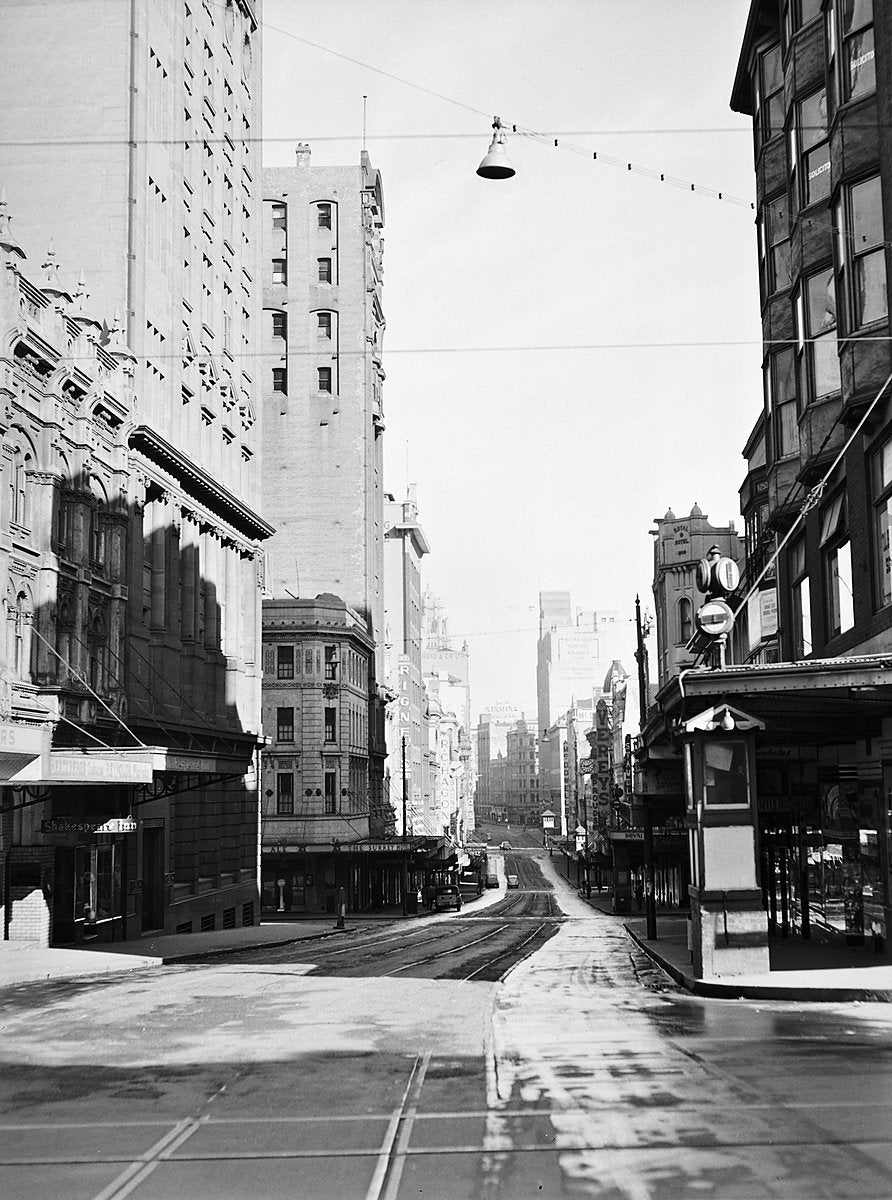
By the 1900s a single-deck tram bound for Rose Bay stands in the roadway outside the Surrey Hotel, with a chemist and a dentist along the block. By the 1940s the crowd has moved to the corner of Pitt and King, where Proud's the Jewellers had opened a five-storey flagship in 1920 — a shop so thoroughly the local landmark that people stopped saying its address and said Proud's corner instead.
Then a wet morning in 1951, looking west toward George Street: tram tracks set in a shining roadway, the street dipping into its hollow and rising again, and almost nobody in it.