Sydney in the 1940s
Start with the marquees. The Theatre Royal in Castlereagh Street is lit for *Annie Get Your Gun*. The Palace on Pitt Street is billing Noël Coward's *Present Laughter*, a play he wrote in 1939 and then could not stage until 1942. The Tivoli's neon runs the width of its frontage at the Haymarket end of Castlereagh Street. All of that is 1949, and every bit of it would have been an offence seven years earlier.
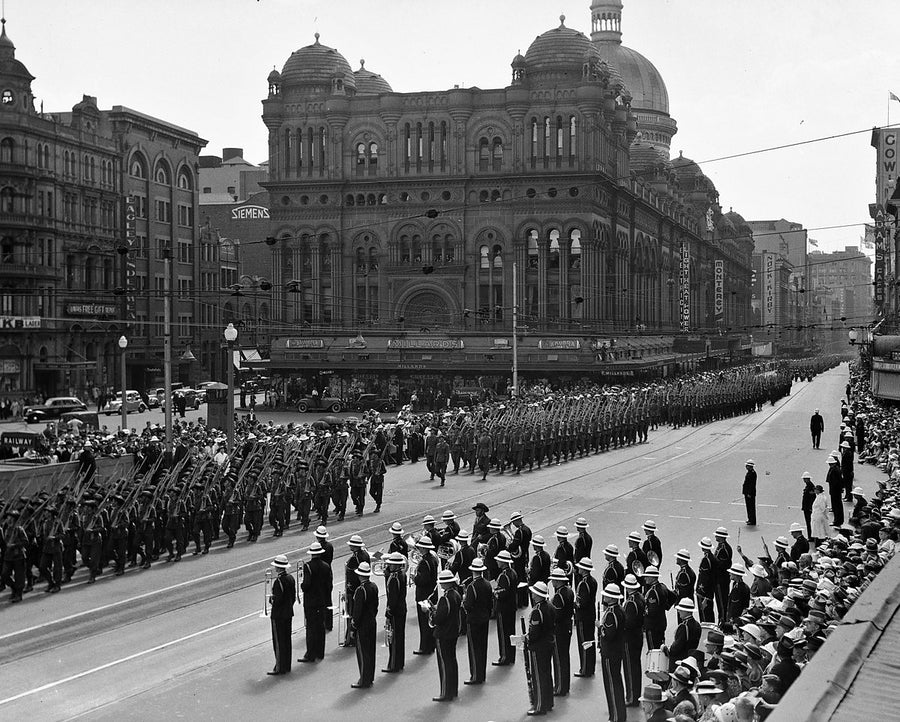
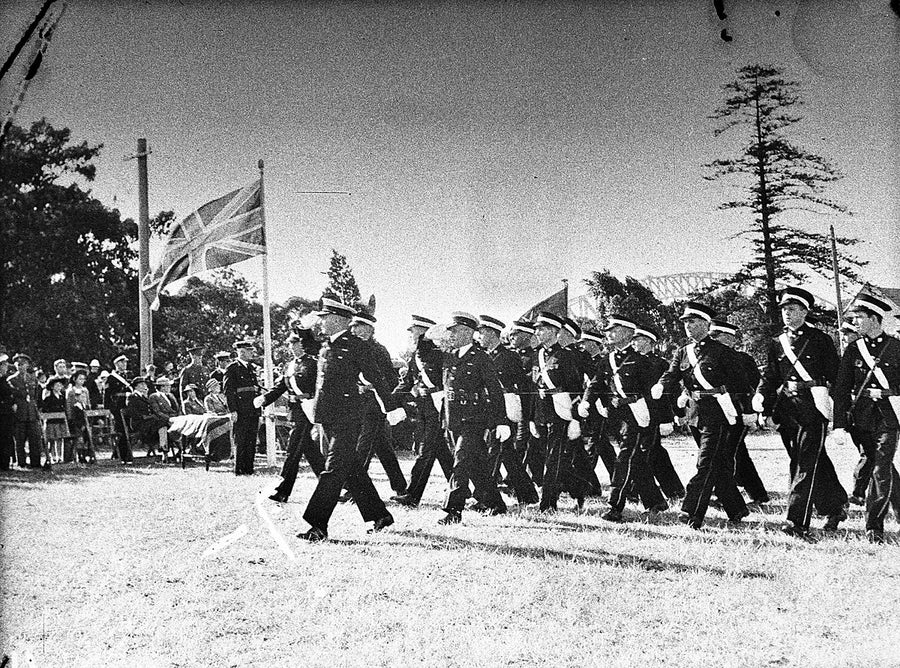
Blackouts and brownouts came in across Australia at the end of 1941 and pre-war lighting did not return until the war did not need it any more. So the decade splits almost exactly in half. The first half is dark and taped and dug in; on 16 August 1945, the day after the surrender, a combined services victory march went straight through the middle of the city, and the crowds packed along those footpaths are the same people who had spent the war years keeping their curtains shut.
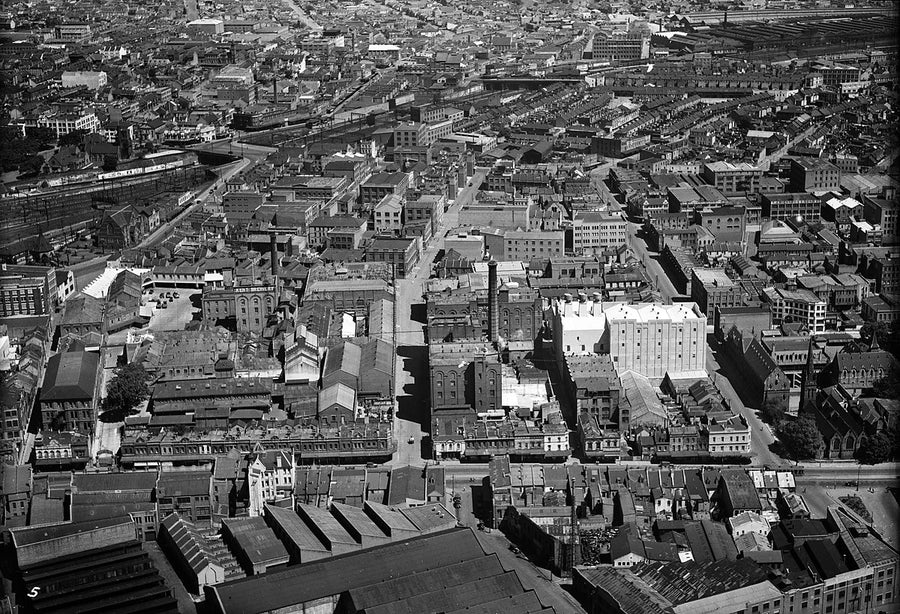
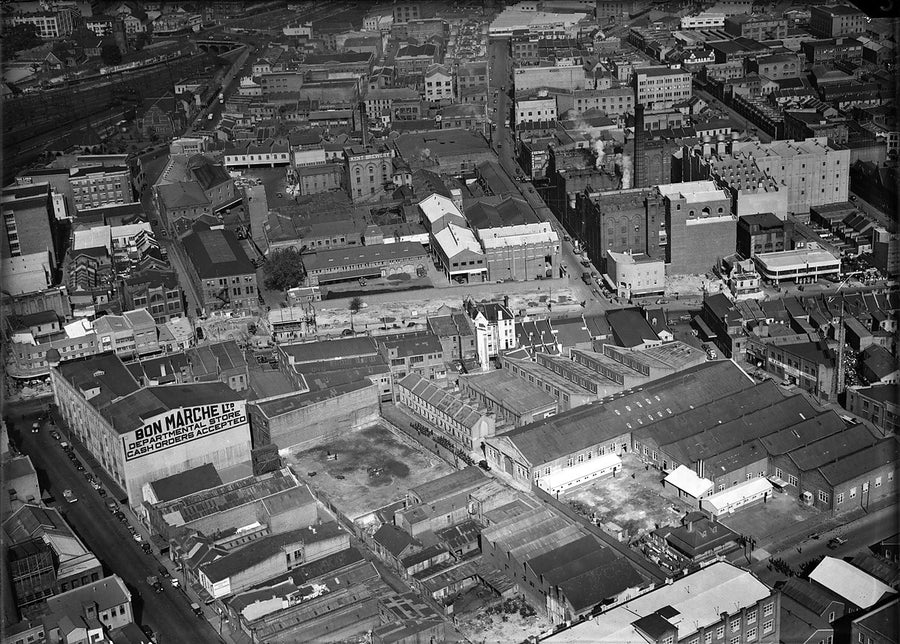
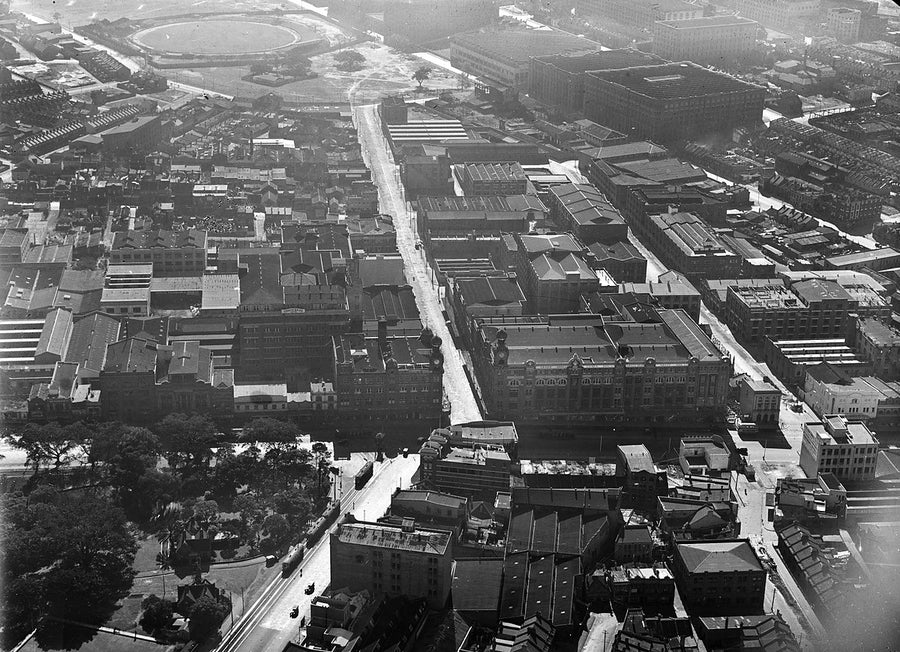
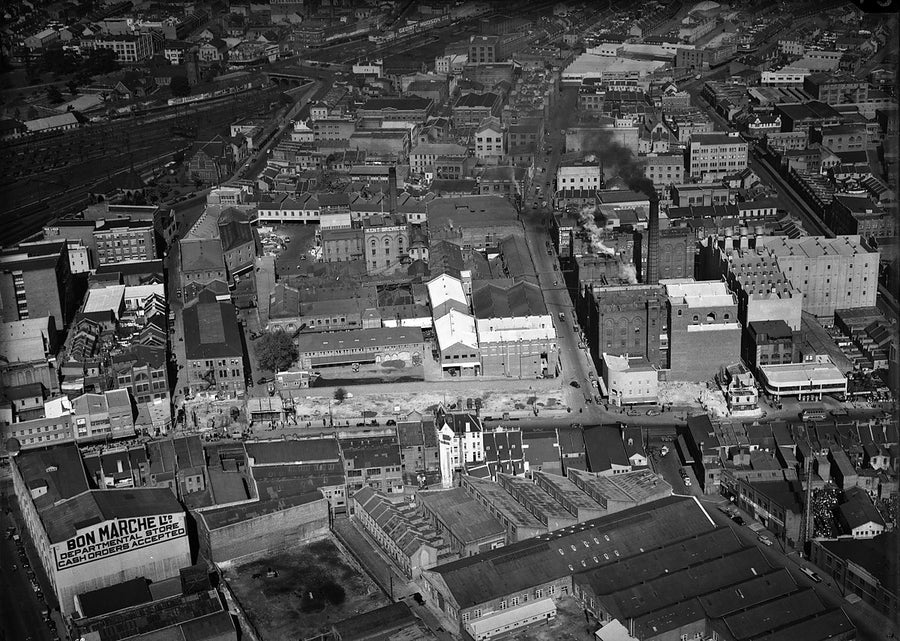
What follows is a rush back at ordinary things, and it is the ordinary things that got photographed. Wool classing and engine work are being taught in 1949 at East Sydney Technical College, which is Darlinghurst Gaol with its internal sandstone walls knocked out and its cell windows enlarged — a working prison until 14 July 1914, a technical college from 1921. Trams run under the tower of the Dental Hospital on Chalmers Street, the railway cutting drops away past Mark Foys off Elizabeth Street, and somewhere in the city a wall of old theatre playbills has been left to peel.
The Tivoli is the easiest thing in the decade to date, because it had been three theatres already — the Adelphi from 1911, the Grand Opera House from 1916, the New Tivoli from 1932, and a Tivoli until its last show in 1966, three years before the wreckers came. Nobody could have photographed that frontage lit in 1942. Someone did in 1949, and it is worth seeing why that mattered.