Marrickville in the 1930s
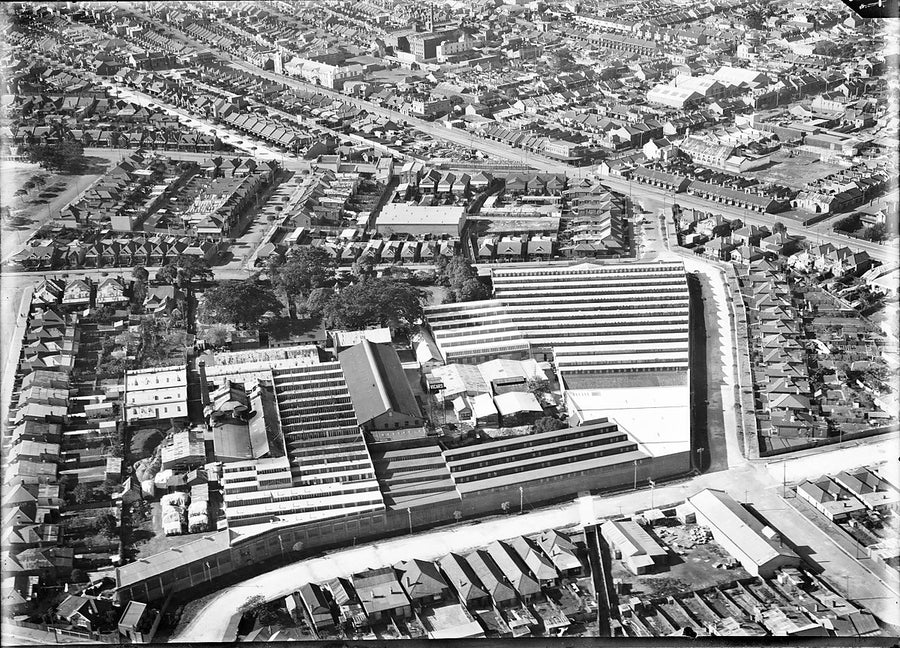
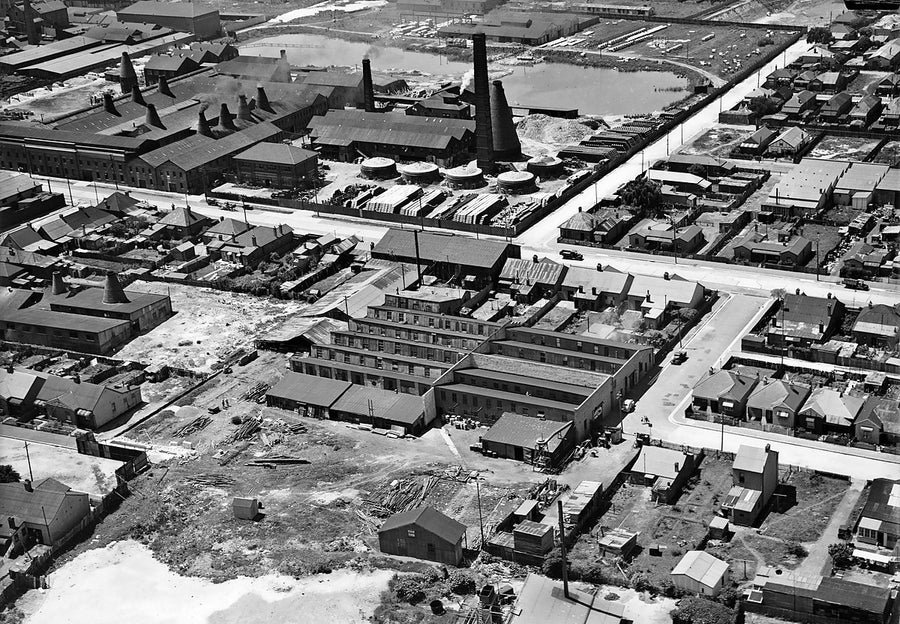
Seen from an aeroplane, 1930s Marrickville is a grid of terrace roofs with factories dropped into it — sawtooth sheds, brick chimneys, rail lines threading between the works and the housing. The most striking thing in those aerial views is a cluster of squat conical brick towers. They are bottle kilns. Marrickville fired plenty of them, and the biggest name doing it was Fowler's.
That pottery had been going for a century by then. Enoch Fowler started it in 1837 on a lease in Parramatta Street with a small up-draught kiln and clay from the site, making salt-glazed jars and ginger beer bottles; the works moved to Glebe, where it took on drainpipes, then to Parramatta Road at Camperdown, where it added bricks. His son Robert inherited it in 1879 and was Mayor of Sydney in 1880. By 1912 the firm had outgrown Camperdown and moved out to seventeen acres at Marrickville, where it made pipes, chimney pots, edging tiles and laundry tubs — the unglamorous ceramics a growing city eats by the tonne.
There is a religious Marrickville underneath the industrial one. The first Carmelite nuns in Australia sailed from the Carmel of Angoulême in France and reached Sydney Harbour on 30 July 1885, and within six months had bought a mansion called The Warren on the banks of the Cooks River here. That venture went badly, and the order gave up The Warren for six acres on Wardell Road at Dulwich Hill, on Marrickville's edge. By the 1930s they were long established, and the chapel photographed here — rose window, gabled brick front, a crowned statue of the Virgin on a pedestal, and inside, walls hung with garlands and greenery for the Prioress's golden jubilee — belongs to that later, settled life.
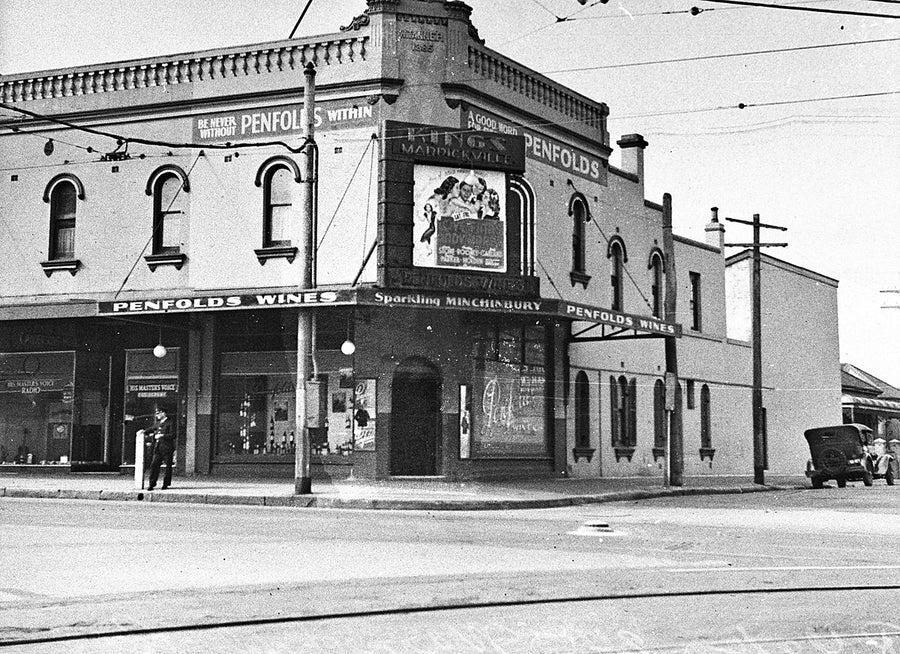
On a corner elsewhere in the suburb, a two-storey wine saloon carries Penfolds advertising across its facade and window awnings — Sparkling Minchinbury, and the slogan *Be never without Penfolds within*. And on a gravel road under an elevated water tower, a woman in a dark patterned dress is walking a tabby-and-white cat on a leash.