Marrickville in the 1940s
In the middle of the war, what the archive calls a record crowd turned out at Marrickville Oval for a game of cricket. The embankment is full to the top, the terracing behind the low white picket fence is full, and beyond the ground fence stand the rows of terrace rooftops and a factory chimney that tell you exactly which suburb this is. Sam Hood photographed it in 1944, the summer Marrickville won its first-grade premiership, with the fielders spread wide and a district's entire idea of a Saturday banked up around them.
That factory chimney was doing well out of the decade. Fowler's pottery, in Marrickville since 1912, appears again from the air — the ring of conical bottle kilns around long saw-tooth sheds, a tall smoking chimney, a cylindrical tank, stacked pipes in the yard and a watercourse down one side. The company had been making the plain and necessary things since 1837: chimney pots, bricks, laundry tubs, and drainpipes since 1860.
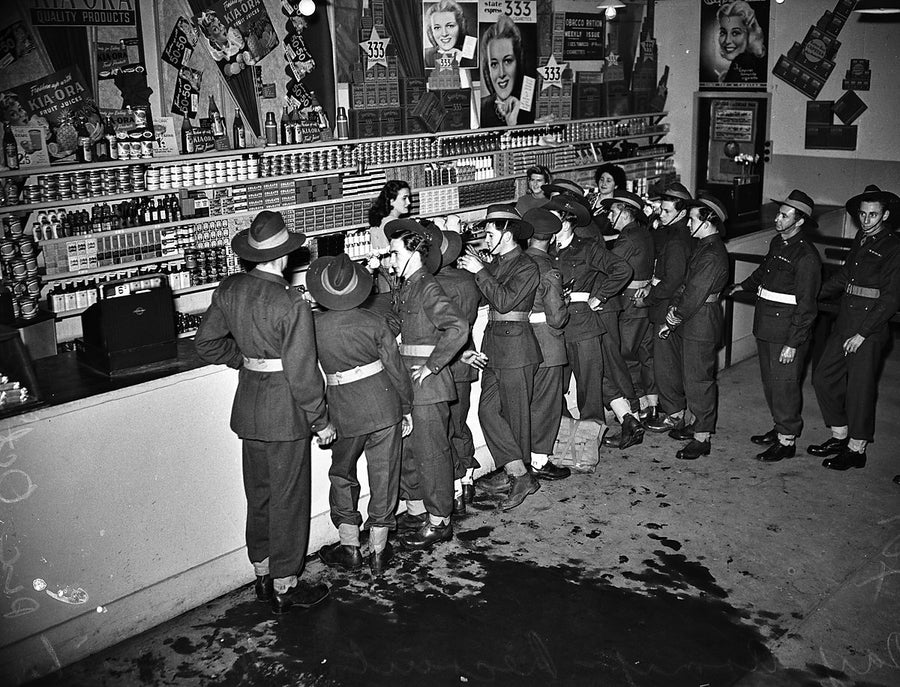
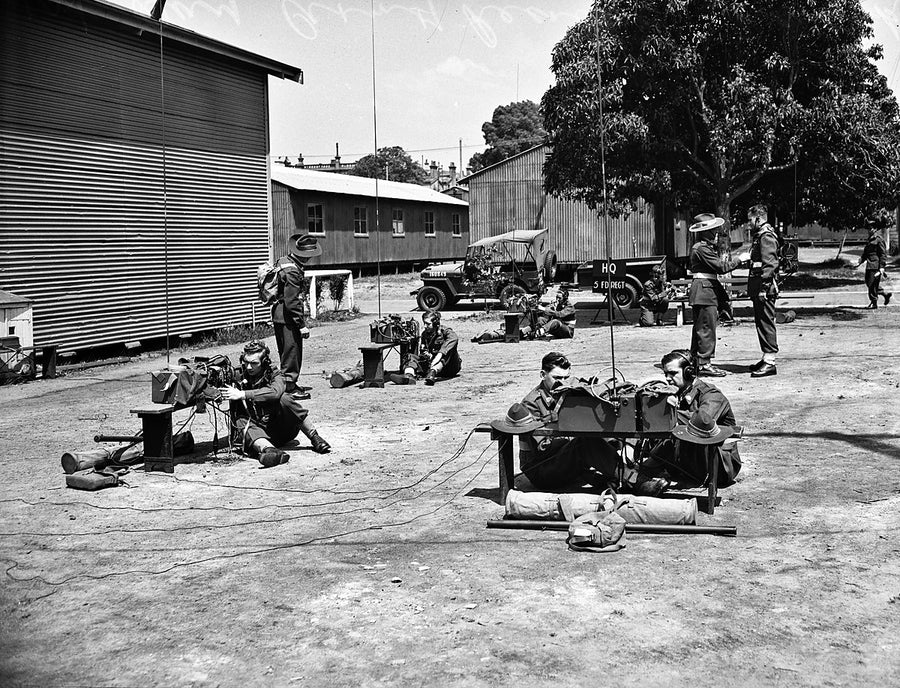
The army is here too, but after the war rather than during it. The Citizen Military Forces began recruiting again in 1948, and Norman Herfort spent a day that October at the Addison Road depot photographing men signing on: first-day recruits in slouch hats standing about a yard, looking into a jeep with its bonnet up while others crouch beside a motorcycle and covered trucks wait behind them. In a park nearby the hoarding that brought them in: *Learn Leadership — Join the New Citizen Army Today*, a painted soldier pointing out of a tank, with the units listed underneath for anyone still interested.