Erskineville in the 1940s
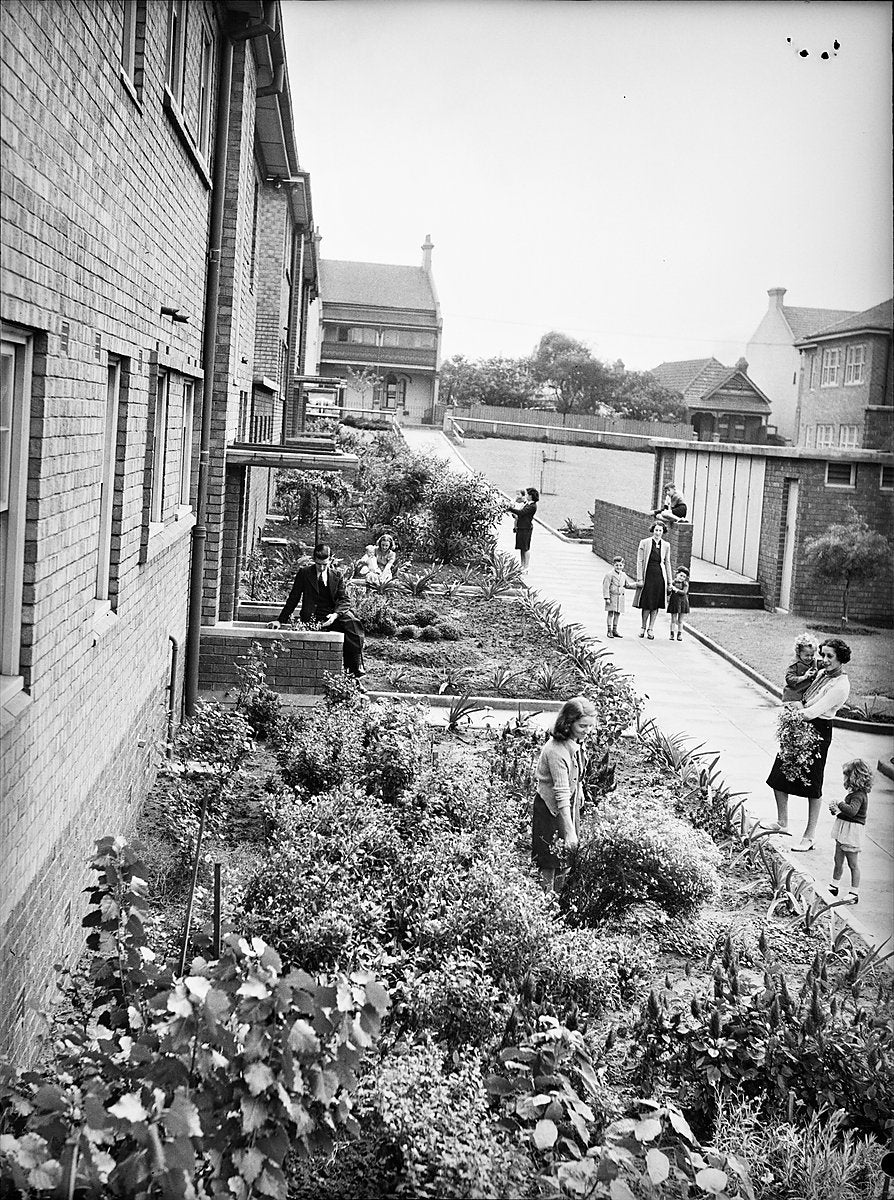
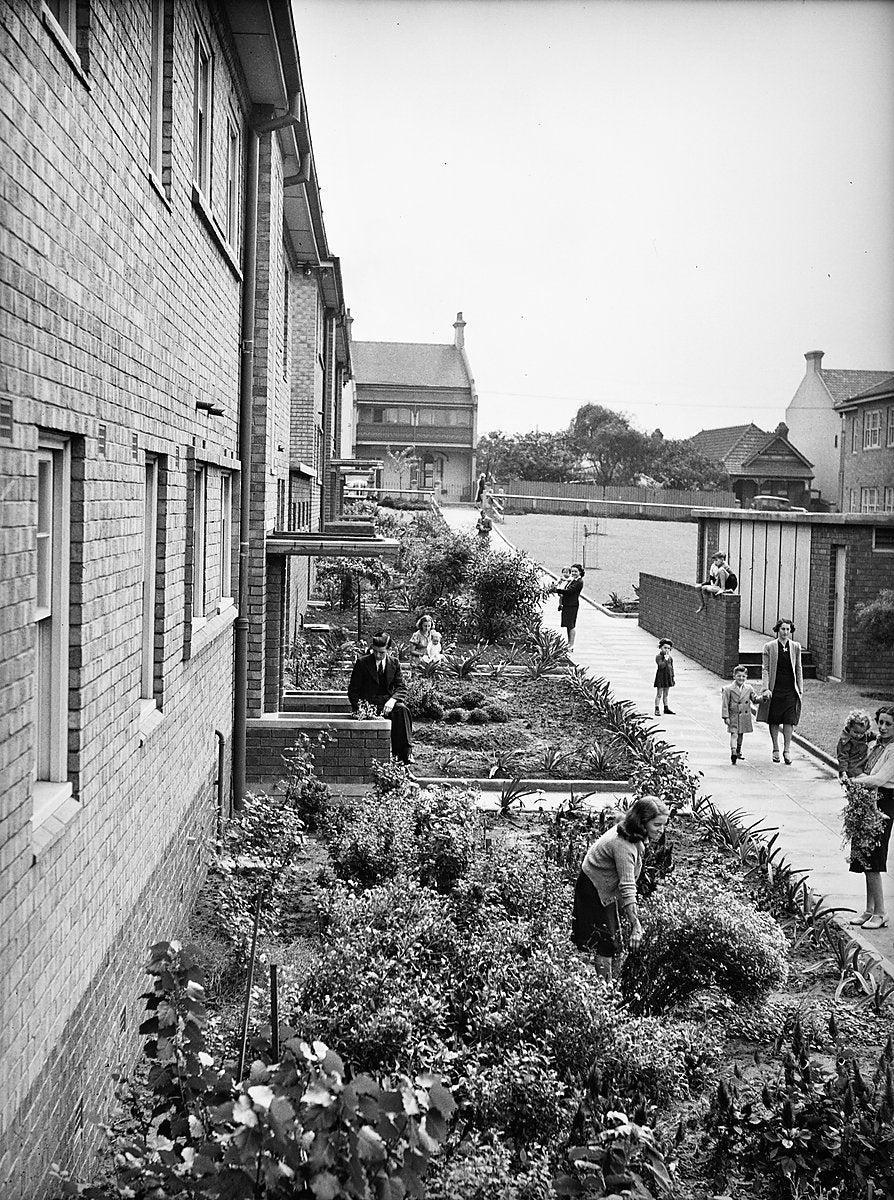
The flats have been lived in for two years by 1940, and the gardens have gone in. Residents are photographed working along planted beds that run between and beside the two-storey brick blocks, one woman crouched at a flowerbed, others walking the concrete path, children among them — with the older tiled-roof houses and a paling fence still right there on the other side. That was rather the point of the exercise, and it is a very different picture from the ones taken here two years earlier.
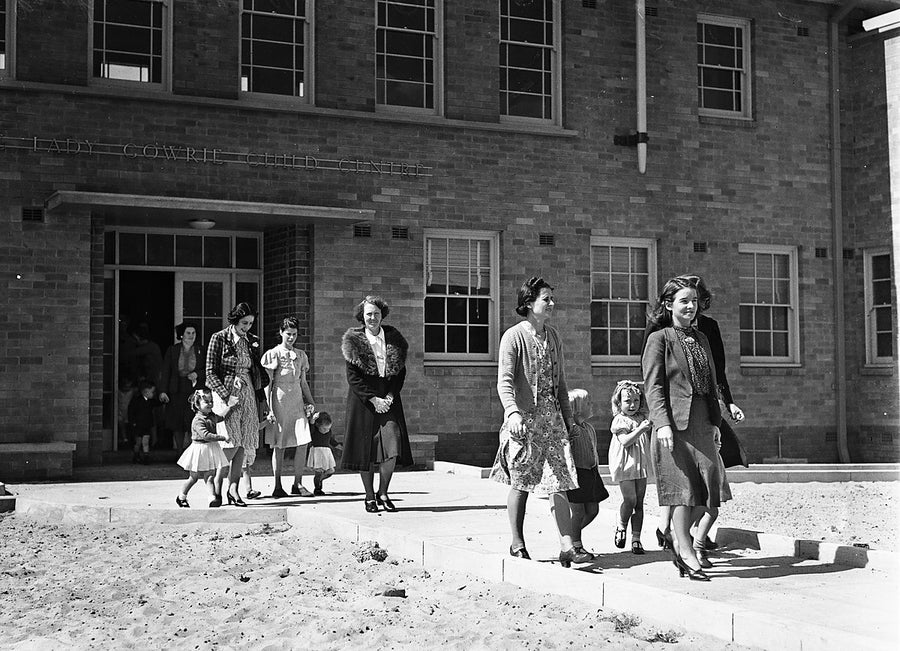
At the centre of the new estate stands the Lady Gowrie Child Centre, which opened in 1940. It was not a local initiative: the Commonwealth built six of these across the state capitals in 1939 and 1940 as demonstration centres for early childhood work, named for Zara, Lady Gowrie, wife of the Governor-General. It was meant to be watched and copied — a training model for education, care and health together — and it was built into the middle of the new estate and designed to be the centre of the community around it. Upstairs there was a room that held parents' talks, theatre, and sewing machines so that mothers could work together.
Then the war reaches the street. Erskineville Public School is photographed in 1943 with a large group of girls in the grounds and a *First Aid Post* sign fixed to the brick building behind them.